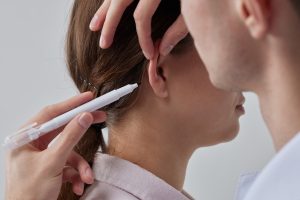
Your ears play a quiet but powerful role in facial harmony. When the ears sit too far forward or appear asymmetrical, they can draw attention away from your eyes and smile. At Columbus Cosmetic, we guide you with clarity and care so your features feel balanced and naturally you. Many patients find that a small change with otoplasty creates a big lift in everyday confidence.
What is Otoplasty and How Does Ear Pinning Help?
Otoplasty is ear surgery that refines the ear shape and position to bring the external ear into better proportion with your face. Some people are born with prominent ears, while others notice the size of large ears more as they age. Ear pinning and ear correction help reduce the prominence of the ears and can improve symmetry for a calm, balanced profile.
Cosmetic ear surgery is different from reconstructive surgery. Reconstructive care focuses on procedures that correct deformities from injury, torn earlobe repair, cauliflower ear from contact sports, or a reconstructed auricle after trauma. These cases may involve a skin graft or costal cartilage for support. Cosmetic surgery such as otoplasty focuses on appearance rather than hearing loss or medical conditions affecting function. Dr. Houser discusses the safest and most effective path for your needs during thoughtful surgical planning.
Dr. Houser’s Approach to Natural Proportion in Facial Plastic Surgery
Your transformation starts with trust. During your consultation, our team listens closely to your goals and examines the portion of the ear that contributes to the look you want to refine. The ear contains delicate cartilage that folds into landmarks such as the helical rim, the scaphoid fossa, the conchal bowl, the superior crus, the inferior crus, and the rim of the auricle.
Some patients benefit from subtle reshaping of the cartilage of the conchal bowl or cavum concha to reduce projection. Others need definition along the superior crus for a refined contour at the front of the ear. Attention to these details plays a key role in natural-looking results.
Dr. Houser is an experienced plastic surgeon trained in facial plastic surgery and modern otoplasty procedures. He selects a surgical technique that suits your anatomy, from gentle suturing to limited cartilage scoring. Many techniques place mattress sutures behind the back of the ears so the front of the ear remains smooth and unmarked. In special situations, shaping may include the cauda helicis or other fine structures to create a balanced curve. The goal of otoplasty is clear: harmonious ears that complement your features without calling attention to themselves.
Am I a Good Candidate for Otoplasty?
You may be a good candidate if you have prominent ears, ear deformities, or asymmetry that bothers you, and you are in good general health. Older children often qualify once the development of the ear has reached adult size, which commonly happens at a young age. Adult patients are welcome at any stage of life. We review medical conditions, blood pressure, and any history of poor wound healing before recommending a plastic surgery procedure.
Recovery, Scars, and Returning to Life
Plan for a short period of time focused on rest and comfort. Most patients feel ready for desk work within several days after otoplasty procedures. The initial bulky bandage comes off as directed, and a lighter headband may be recommended for sleep. The small incisions are usually concealed in natural folds behind the back of the ears, which helps keep the front of the ear smooth and free of visible marks.
To protect your results, avoid contact sports, strenuous activities, and any physical activity that could bend the ears until Dr. Houser clears you. A careful routine supports proper healing and preserves the refined contours. The new position of the ear settles gradually, and the prominence of the ears continues to soften as swelling resolves. Our team stays in close contact with you throughout recovery, answering questions and guiding you step by step.
Otoplasty for Teens, Professionals, and Adults
Confidence matters at every age. Younger patients and older children often feel a powerful boost after ear correction, especially when prominent ears have been a source of self-consciousness. Adult patients appreciate facial balance in photos, at work, and in social settings. We tailor each plan to your goals so the result supports your life. For some, that means a subtle set-back of the ears. For others, it may involve refinement of ear shape so both sides look more alike.
Is Otoplasty Right for My Ears and My Lifestyle?
We consider your anatomy, schedule, and activities. If you play contact sports, we help you time your procedure and recovery to protect your ears. If your work involves helmets or headsets, we plan around those needs. Clear guidance helps you return to daily routines comfortably and confidently.
When Reconstruction Is Needed
Cosmetic ear surgery and reconstructive surgery sometimes overlap. Patients with a torn earlobe, cauliflower ear after trauma, or a complex defect may require techniques that correct deformities and rebuild structure. In rare cases, a reconstructed auricle may use a skin graft or costal cartilage to support shape. Dr. Houser will explain whether otoplasty surgery or a staged plastic surgery plan best fits your situation. Otoplasty focuses on appearance and does not treat hearing loss, though we always consider overall ear health when planning care.
Planning for Safe, Smooth Healing
Preoperative evaluation plays a key role in great outcomes. We review your health, any medical conditions, and medications. We discuss blood pressure control and habits that affect healing. We also cover practical steps such as arranging a ride home, setting up a comfortable rest area, and preparing soft headbands or pillows. Clear instructions help you avoid pressure on the ears for a defined period of time, protect incisions, and return to gentle physical activity safely.
Your Personalized Otoplasty Consultation
From your first consultation to your final follow-up, we walk with you. We discuss your goals, explain the plastic surgery options, and review photos and measurements that guide surgical planning. You gain a clear understanding of the plastic surgery procedure, the likely timeline, and how to care for your results.
Ready to explore a balanced, confident profile with otoplasty in Columbus?
Request an appointment and discover what is possible with natural-looking beauty, enhanced by expertise. Our team is here to listen, guide, and help you take the next step with comfort and confidence.