
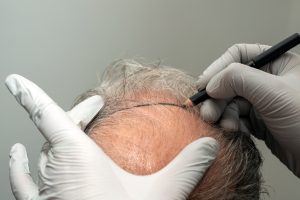
When you start noticing hair transplant surgery in your search results, you’re likely thinking beyond quick fixes. You want a plan that looks right today and still looks right years from now. For many men, hair loss quietly affects confidence, from the mirror in the morning to photos, meetings, and social events. At Columbus Cosmetic, Dr. Houser and our team approach hair restoration as a thoughtful medical decision guided by your goals, comfort, and a realistic path to a natural look.
Long-term hair restoration works best when you think like a planner. You consider your type of hair loss, the amount of donor hair you have, how you wear your hair, and what you want your hair to look like as you age. You also deserve clear guidance about options that fit your lifestyle, whether you want hair replacement surgery or prefer to start with non-surgical support for healthy hair.
Why do men think about long-term first with hair transplant surgery?
Most men exploring hair transplant surgery want results that blend seamlessly with their natural hair. That long-term mindset matters because male pattern baldness often changes gradually. The top and front of the scalp may thin first, with the affected area expanding over time. Planning your recipient area with the future in mind helps maintain a balanced appearance as your natural hair changes.
A long-term plan also helps set realistic expectations around hair density. Every scalp has limits based on the number of grafts available and the donor area’s capacity to provide hair. Aligning your goals with a realistic graft strategy ensures a consistent, age-appropriate outcome, with transplanted hair placed to support your facial structure and preferred style.
What type of hair loss are you seeing, and why does it matter?
The most common cause of hair loss in men is male pattern baldness, which follows a recognizable pattern across specific areas of the scalp. Your pattern helps determine which area needs attention first and how much hair can be placed to maintain a natural look. It also influences whether you focus on the hairline, the crown, or multiple zones over time.
During a consultation, your provider considers your medical history and the quality of your donor site, often located at the back and sides of your head. Hair in these areas tends to remain stronger over time, making it ideal for grafts. Understanding your type of hair loss early allows you to choose a plan that supports lasting hair growth instead of chasing short-term changes.
How do you choose among types of hair transplant and methods?
Many men feel stuck comparing hair transplant techniques online. A clearer approach is to focus on safety, scarring, downtime, and how well the method supports the final distribution of follicular units. Some methods involve removing a strip of scalp, often called the strip method, followed by preparing follicular unit grafts for placement. Other approaches use follicular unit extraction (FUE), which harvests individual grafts from the donor area.
What the procedure feels like, step by step
Understanding the procedure can help you feel more confident. During the procedure, you remain awake and alert, with local anesthesia used to ensure comfort. The setting is organized and calm, with planned breaks during the day.
After the procedure, you return home the same day with instructions for caring for transplanted hair and supporting early healing. Most people resume regular activities within a few days, making the process manageable for busy schedules.
Graft math: donor area, number of grafts, and “enough hair”
Hair transplant decisions often come down to supply and strategy. Your donor area determines how many follicular units can be harvested while maintaining a natural look at the donor site. Men often ask if they have “enough hair” for the change they want, and the answer depends on the size of the area being treated and the characteristics of your existing hair.
Your provider considers:
- The amount of hair available at the back and sides of your head
- The areas of the scalp you want to address now versus later
- The number of grafts needed to create natural coverage and appropriate density
- How your hair may continue to thin over time
This planning helps avoid concentrating all grafts in one area, leaving other zones without long-term options. A careful approach also supports healthy hair around the transplant zones and keeps your final result balanced.
Timing and patience: what “new hair growth” really looks like
After hair transplant surgery, men often look forward to visible change and wonder when they’ll see new hair. Transplanted hair grows steadily over time, with new growth typically visible after a few months. Significant changes often appear around six months, with continued improvement as hair growth progresses.
It’s important to remember that hair restoration has a blending phase. As new hair fills in, it integrates with the rest of your hair to look natural in different lighting and styles. Thoughtful planning, including hairline design and distribution, supports a believable full head of hair as the months go by.
Complementary options to support hair restoration goals
Some men want to protect their existing hair while planning a transplant. Columbus Cosmetic discusses prescription options and in-office treatments during your consultation, including finasteride therapy, Minoxidil medication, and Platelet Rich Plasma treatment. These options focus on maintaining and supporting hair growth, particularly in areas not yet transplanted.
Dr. Houser also offers the ALMI™ Procedure, a minimally invasive, all-natural treatment to regenerate hair follicles without surgery. ALMI™ Hair uses adipose cells and platelet concentrates injected into areas of sparseness, bald spots, or receding hairlines. Performed under local anesthesia, it supports regrowth and increased thickness that improves with each growth cycle. For some men, this becomes a stand-alone plan; for others, it complements a broader hair restoration strategy.
Safety, planning, and the risk of complications
Any cosmetic surgery decision deserves clear conversation about safety and individual suitability. Your medical history, scalp condition, and goals influence your personal risk profile, along with the care instructions you’ll need to follow after surgery. A consultation gives you the space to ask direct questions about risks, realistic healing expectations, and how the team supports you throughout the experience.
At Columbus Cosmetic, the tone stays calm and practical. You get a plan built around your needs, along with guidance that helps you feel confident about each choice.
A confident next step: schedule a consultation for hair transplant surgery
When you’re ready to explore hair transplant surgery with a long-term view, you deserve a team that listens carefully and plans with precision. Dr. Houser will examine your hair loss, discuss your options, and help you map out a strategy for natural-looking hair replacement that fits your life. Request an appointment with Columbus Cosmetic to see what’s possible and build a plan you feel good about for years ahead.